Rejected by bioRxiv. Blocked by ResearchGate.
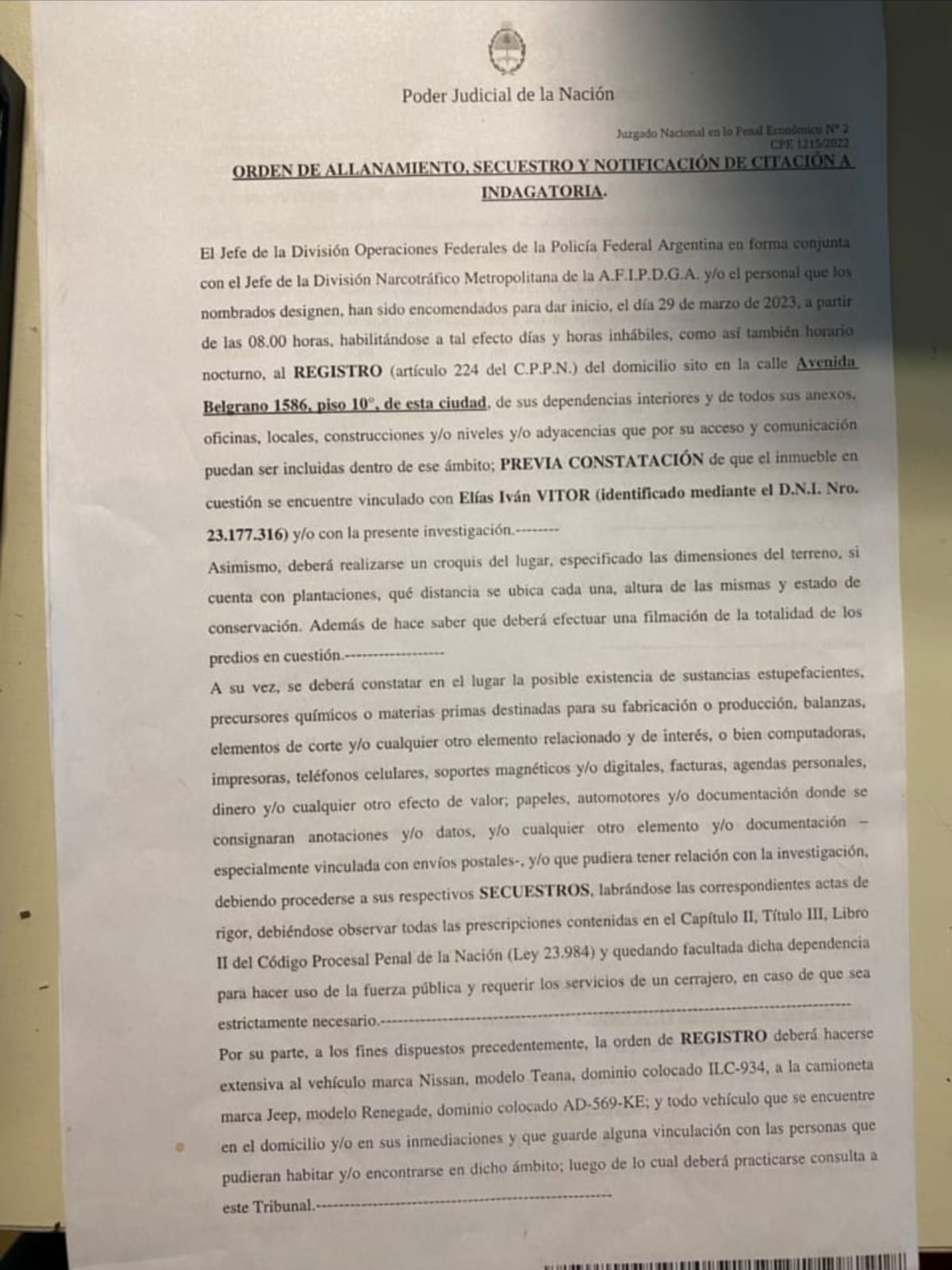
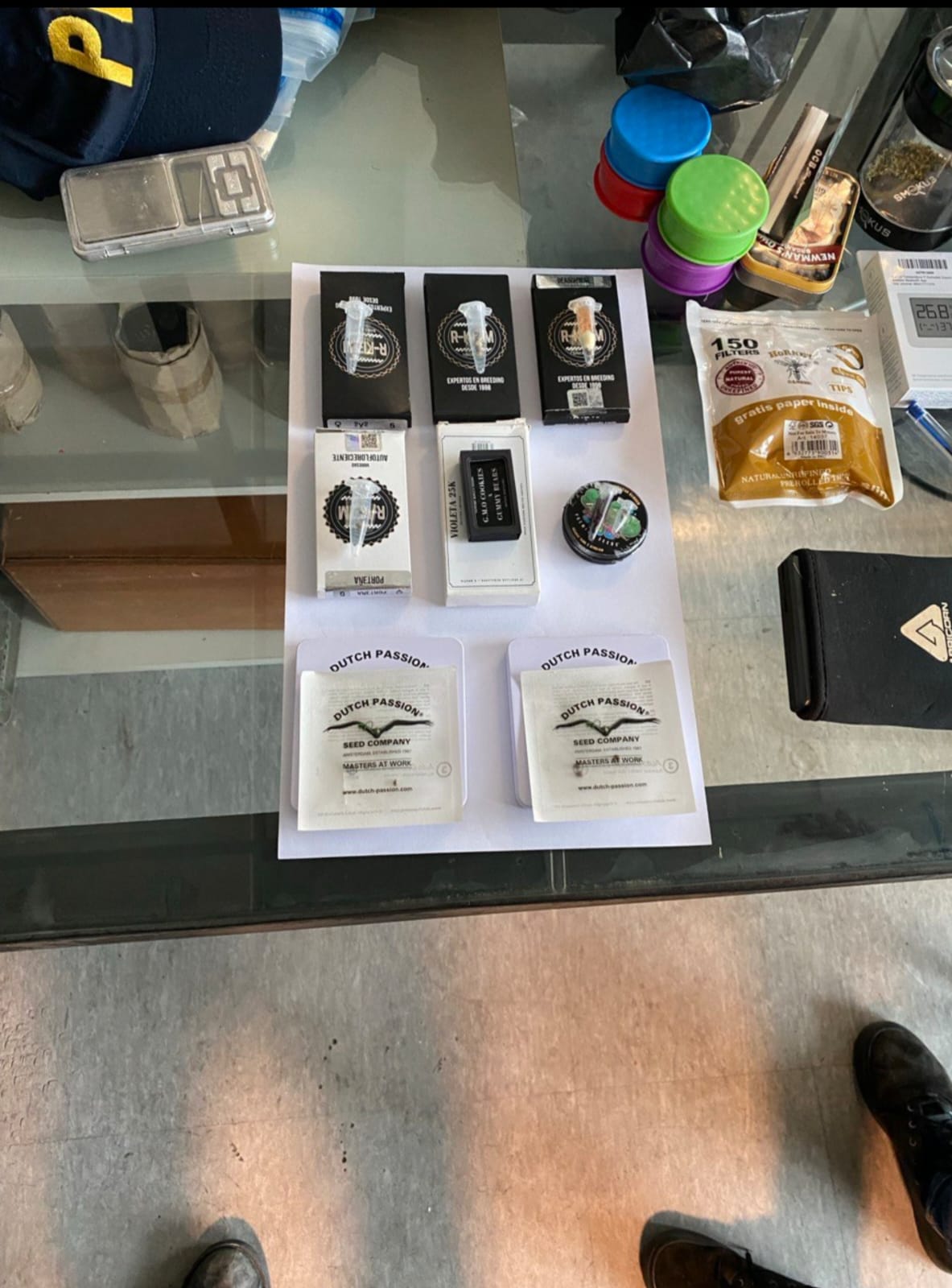
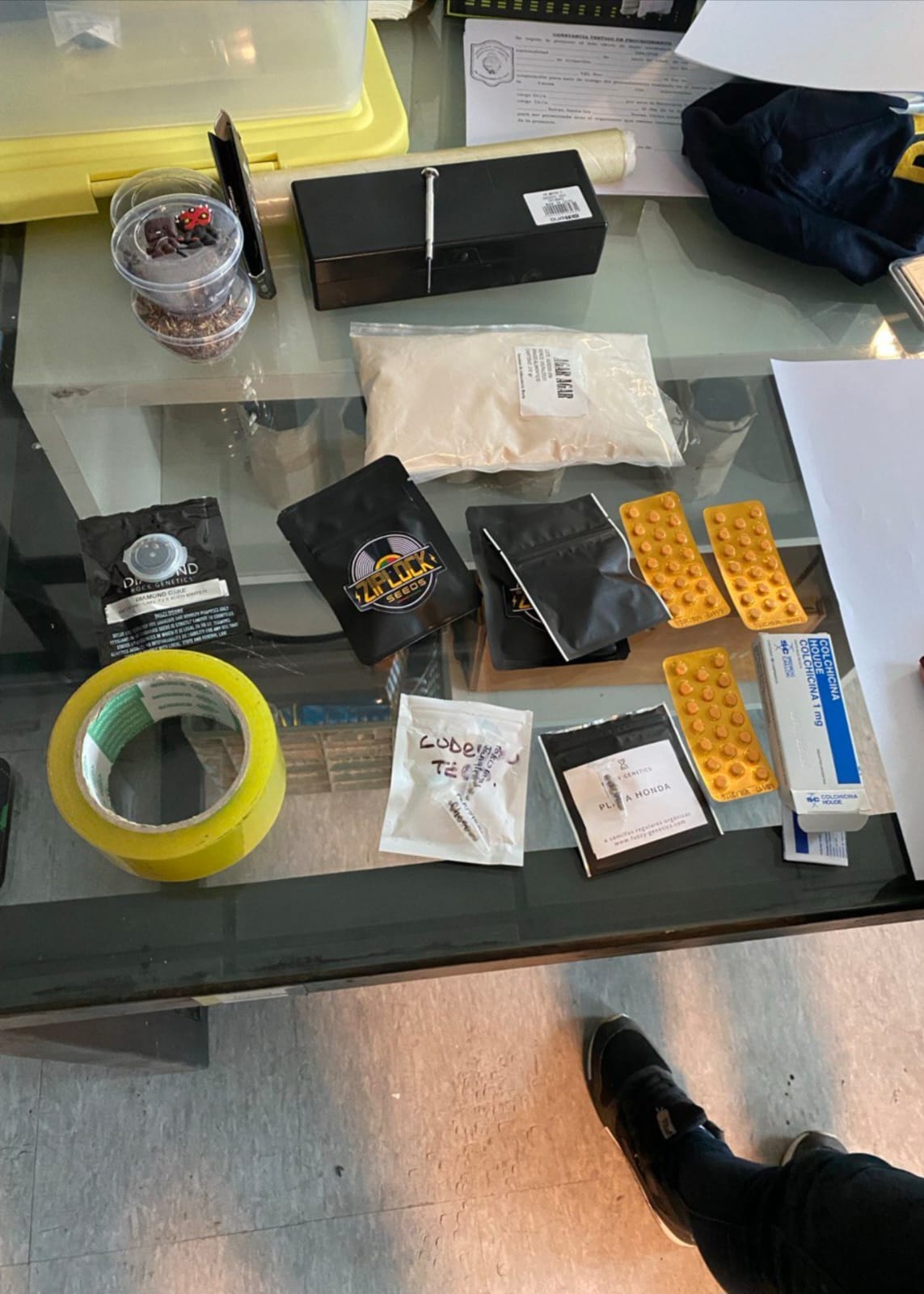
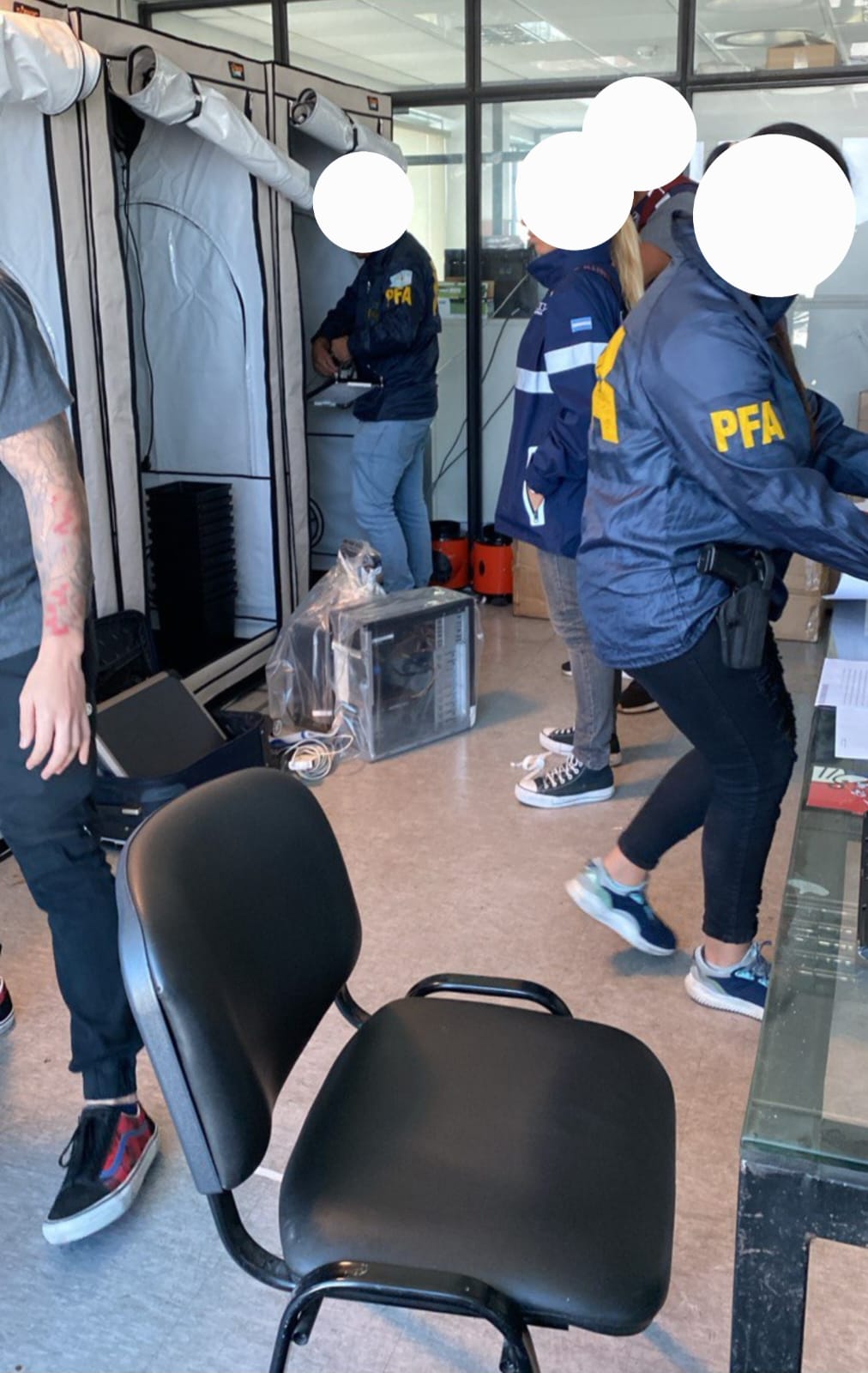
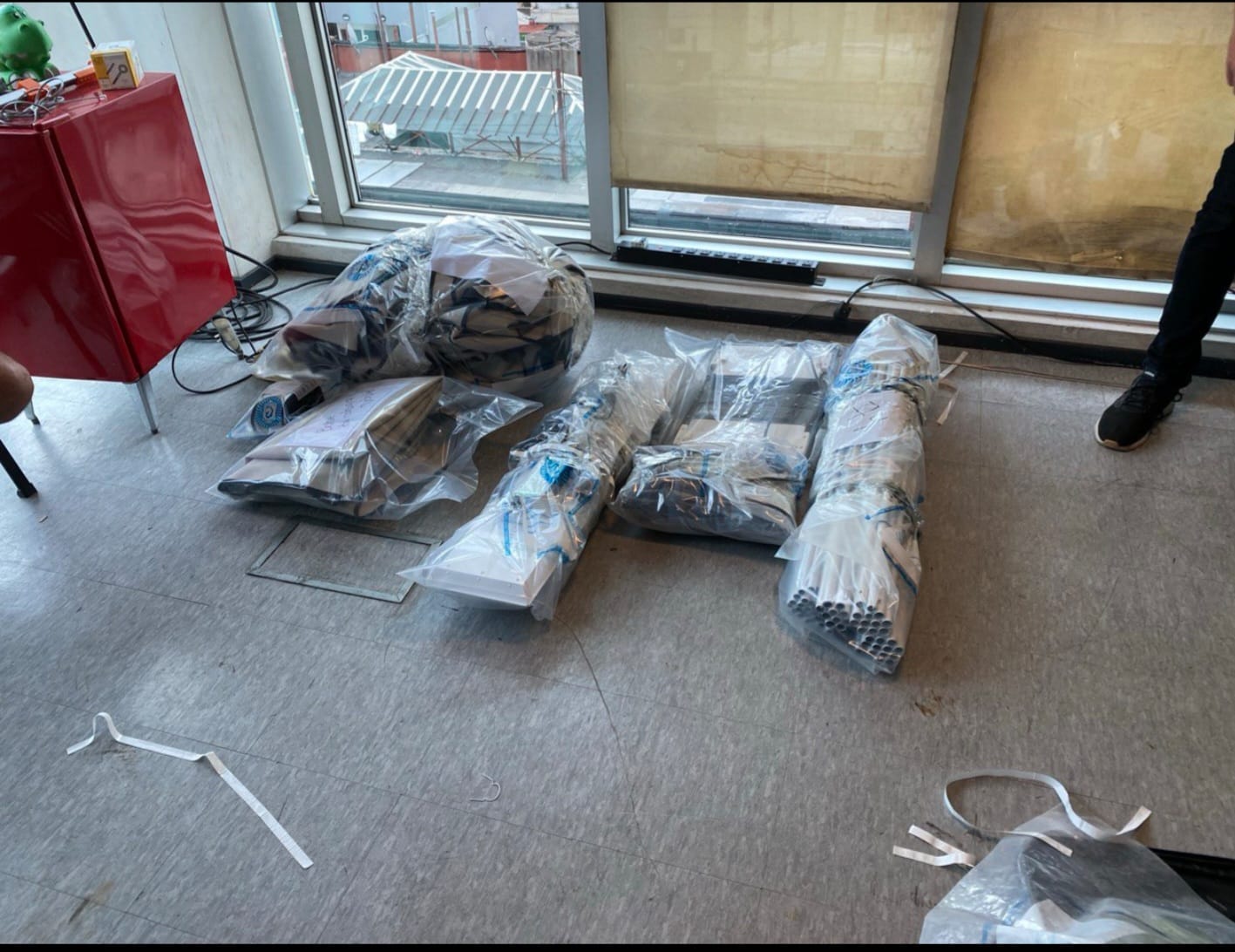
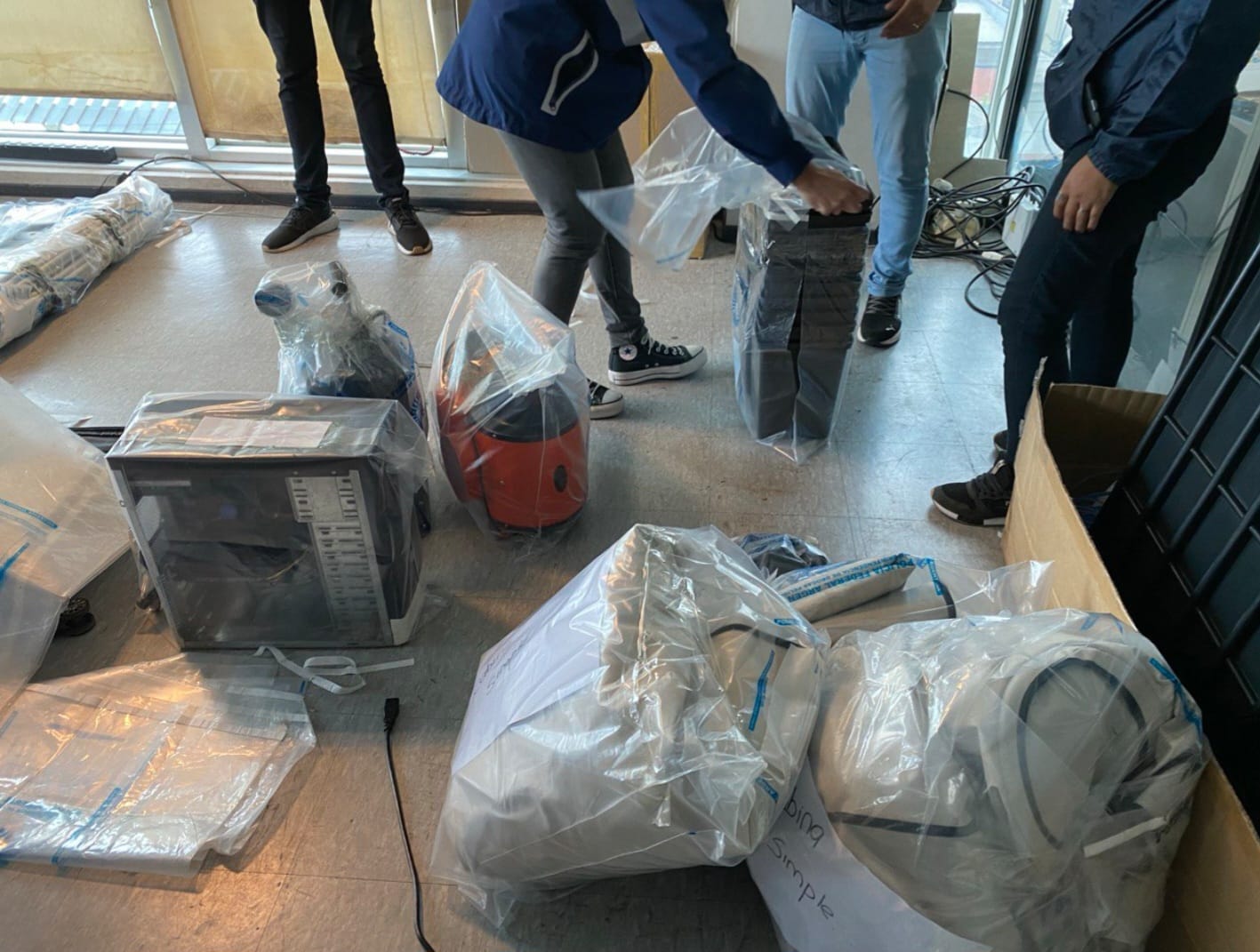
Raided by law enforcement.
And
yet, the flowers keep mutating.
This is not a project. It's a breach in the timeline of plant science.
The day is no longer 24 hours. The science is no longer institutional.
Version 0.3 of Circadian resonance in Cannabis sativa. Yield, morphology and resin under four periods with paired clones is public, with its methods section written out in full and its references checked one by one.
Predictions were registered on 16 August, before assembly and with no data taken. The limits of the design are published too: one plant per genetic per arm, one cubicle per arm, manual irrigation, PAR still unmeasured. A limit found afterwards is an excuse.
Results expected November 2026, whichever direction they point.
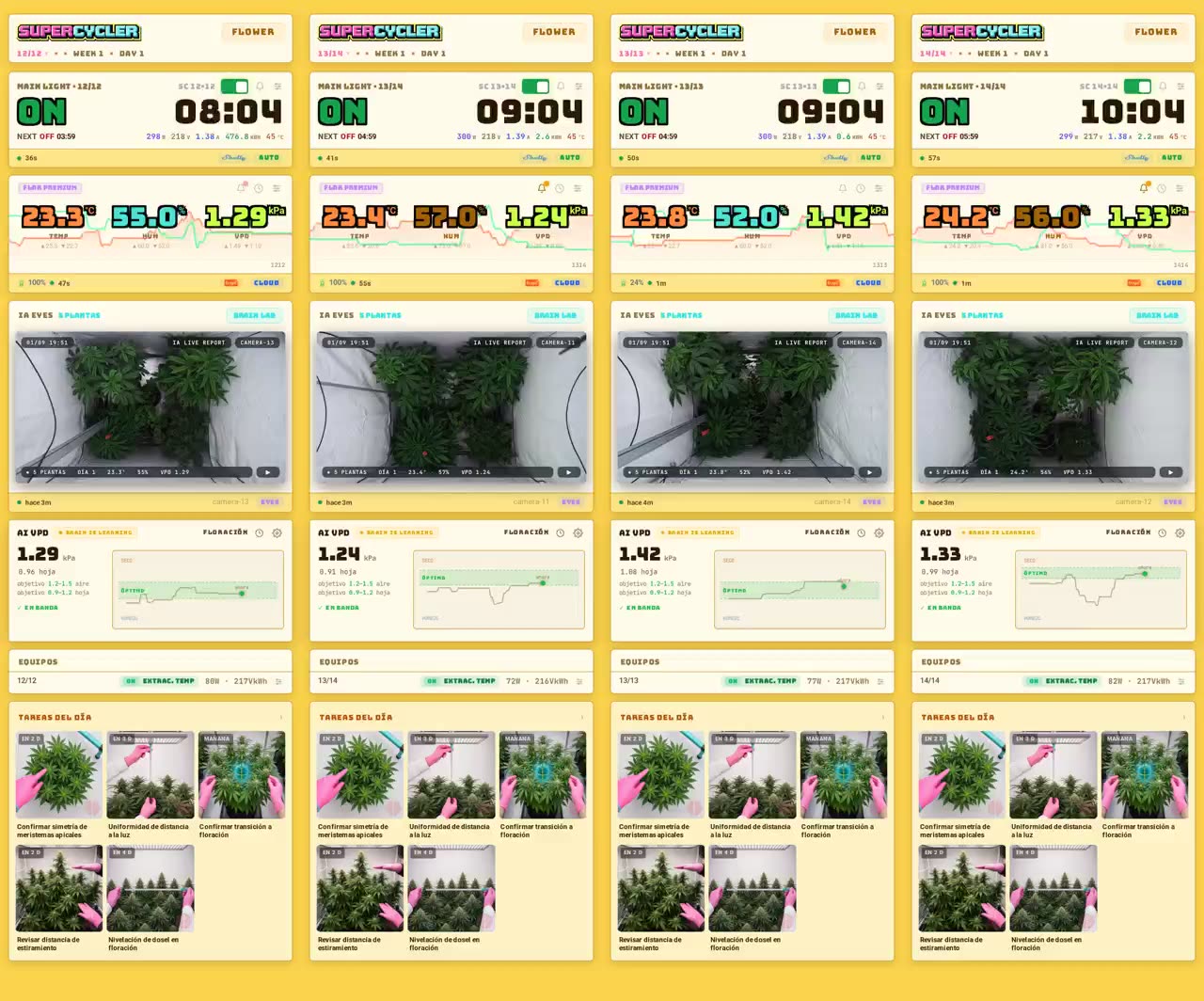
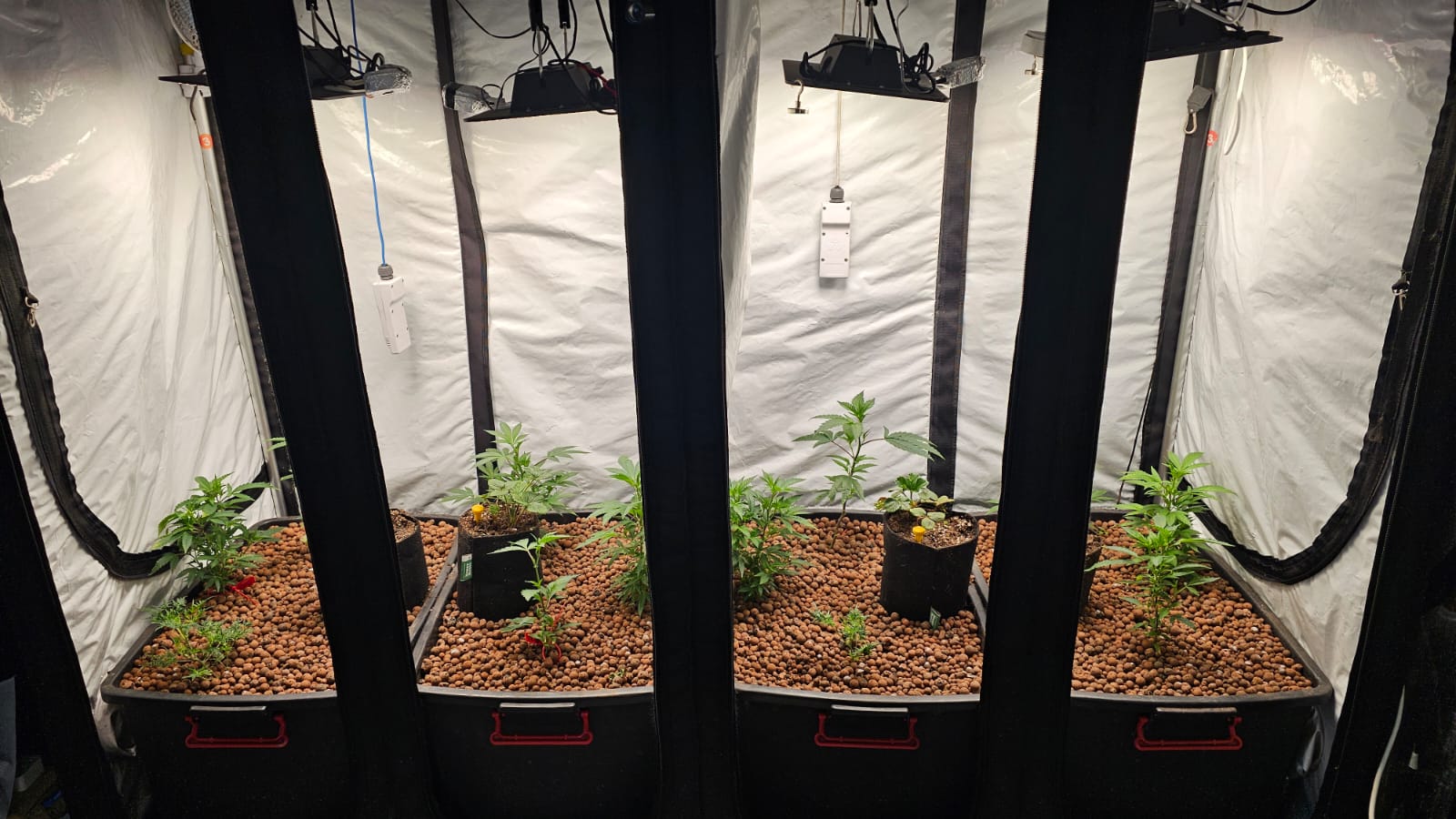
Flip to flower. Four identical cubicles of 1 × 1 × 2 m, one period each: 12/12 at 24 h, 13/13 at 26 h, 13/14 at 27 h and 14/14 at 28 h. Four cloned genetics, each one repeated in all four rooms. The only thing that differs between rooms is the length of the cycle.
The bet sits on 27 h: if the endogenous clock of the species is near that value, the 27 h arm should out-yield the rest — while receiving 3.7% less light per calendar day than the control.
Cutting is per plant, on a maturity criterion declared before day 1, not on a common date. A pot of chrysanthemums rides along in each room as a second species, outside the main variable.
The four lights hang off a single Shelly Pro 4PM, one channel per cubicle, driven by Supercycler in supercycle mode. Each transition is executed and confirmed, and the log is what makes the schedule auditable afterwards.
On 16 August the predictions went public: highest dry weight at 13/14, then 13/13, then 14/14, and 12/12 last. Same direction expected across all four genetics. Comparable calendar length between 12/12 and 13/14. More resin in 13/14 than in 13/13 at similar mass.
On 17 August the four cubicles were assembled: same substrate, inoculated the same day, same fixture model, same irrigation scheme.
The pre-registration had planned the flip for 20 August. It happened on 1 September, because levelling the four rooms took longer than expected. The original text stays untouched and the real date is recorded next to it. That is the whole point of pre-registering.
iOS release. The same account that runs on the web and on Android now runs on iPhone and iPad, with push alerts when a room drifts out of range.
With Google Play since June, the line this page carried for a year — "coming soon: mobile app Android iOS" — stopped being a promise.
Supercycler lands on Google Play. An ordinary timer repeats every 24 h by definition, so it cannot hold a 27 h cycle. This one computes each transition, sends it to the plug and records the one that actually happened.
It counts SC — completed supercycles — next to the calendar day, which is the only honest way to compare two grows on different periods.
Shelly, Sonoff, Tuya, AC Infinity, Mars Hydro, Spider Farmer, TrolMaster, Home Assistant and plain ESP32 all speak to it. Running a supercycle stopped requiring a hand on the switch.
"We don’t care about bioRxiv. We care about what growers can actually reproduce."
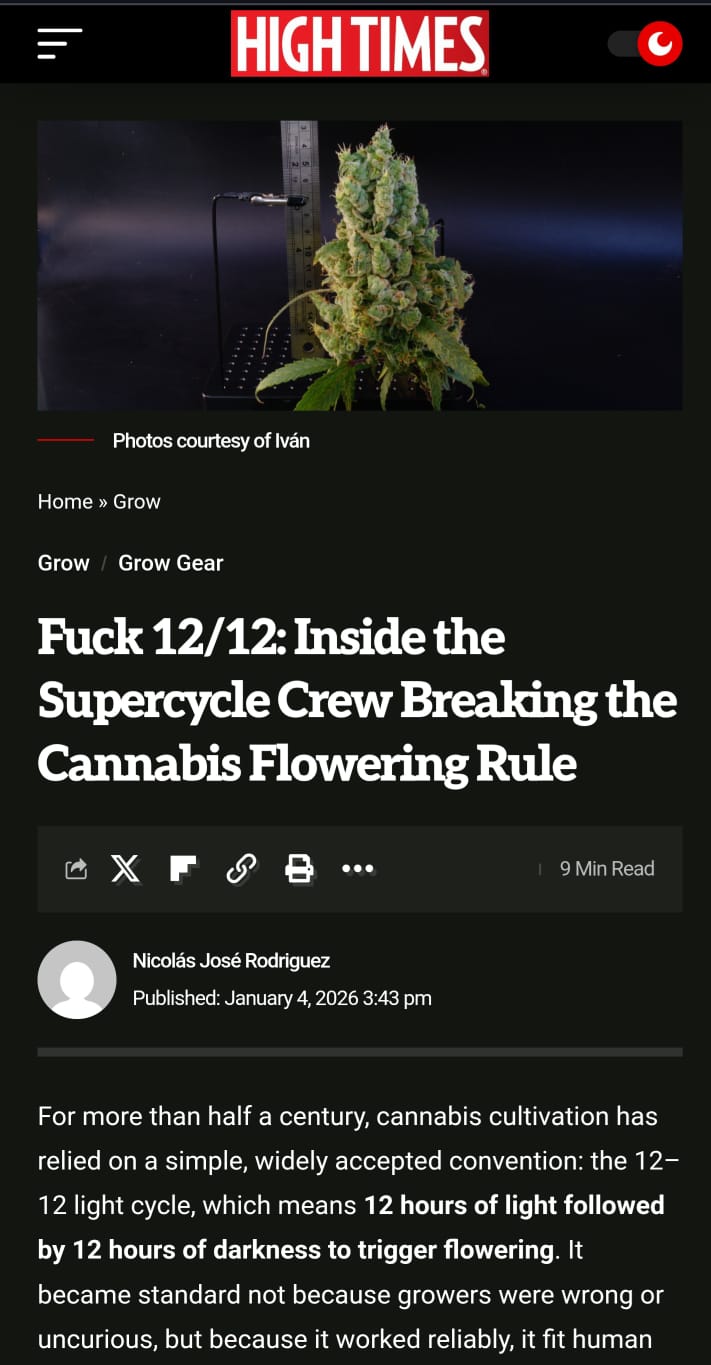
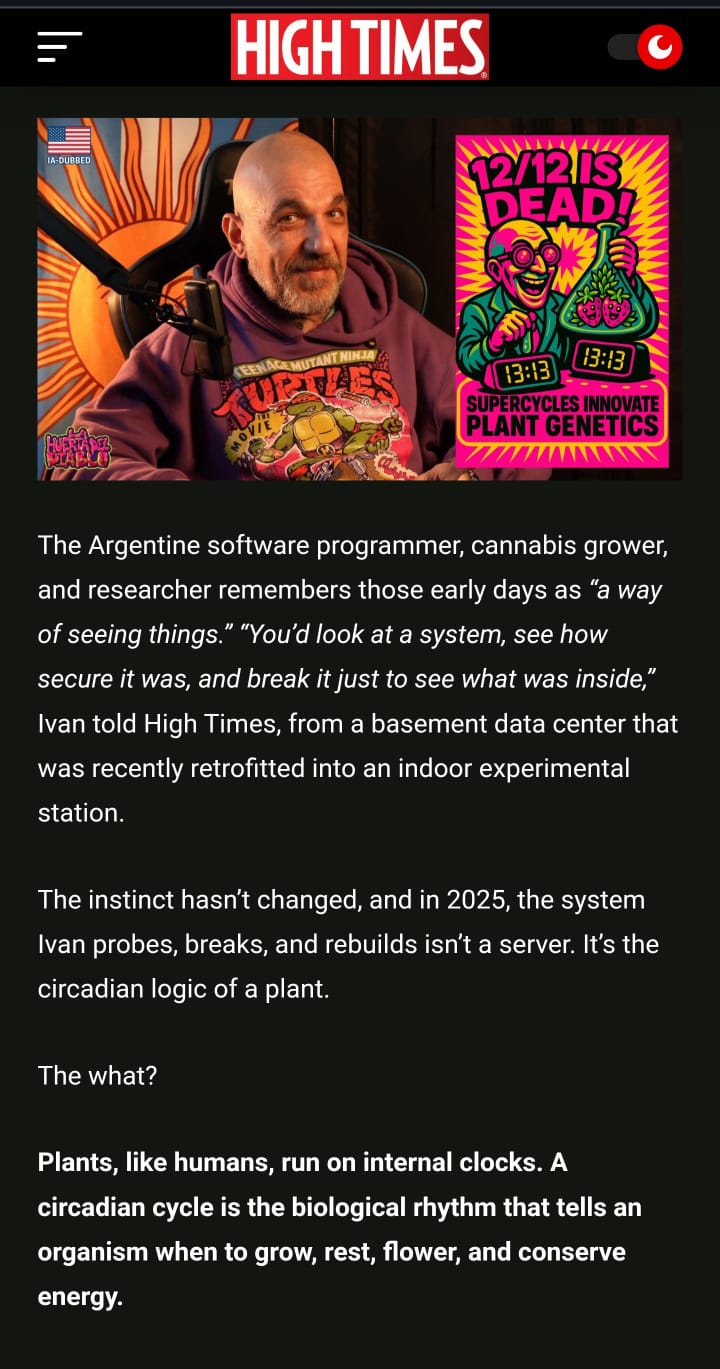
High Times featured our work. This isn’t institutional science. This is real-world science, validated by the only people that matter: real cultivators.
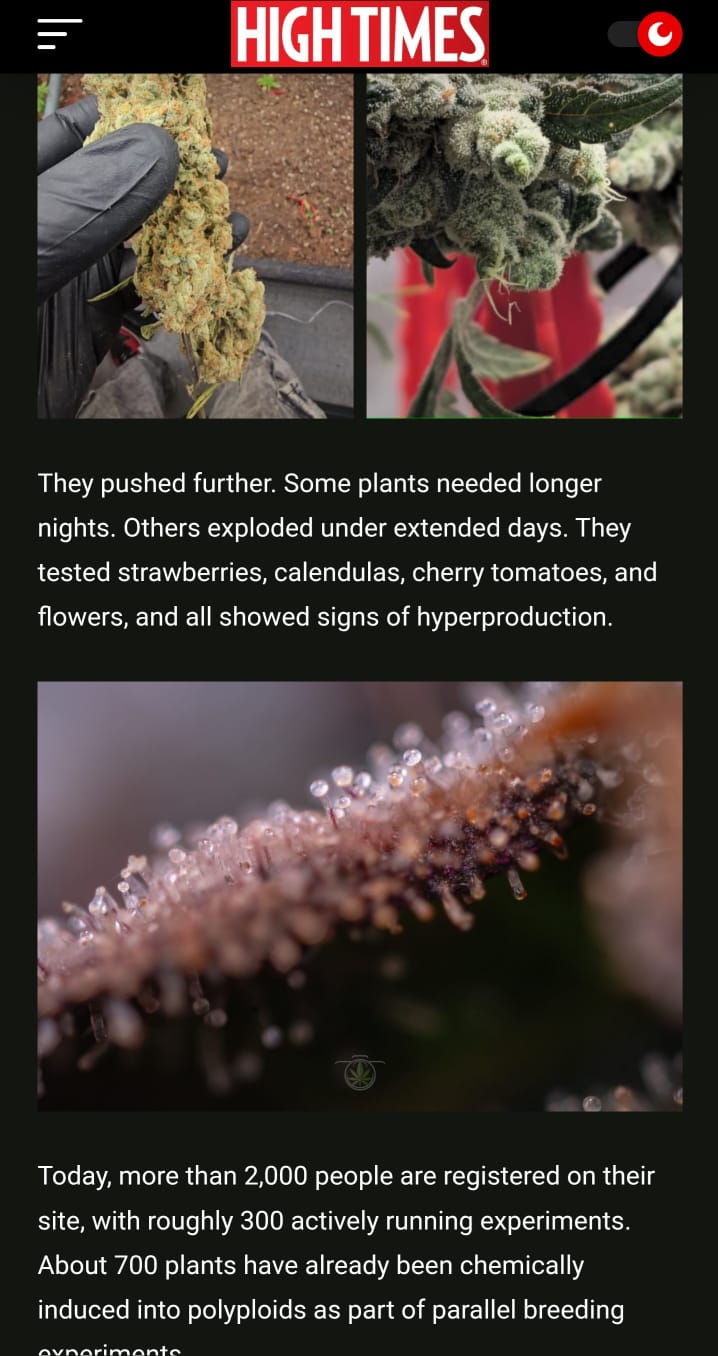
No permission asked. No filters. No theory without proof.
Es comercial porque funciona. Es ciencia porque es medible. Y lo validan los únicos que importan: CULTIVADORES REALES.
Science for growers. By growers.
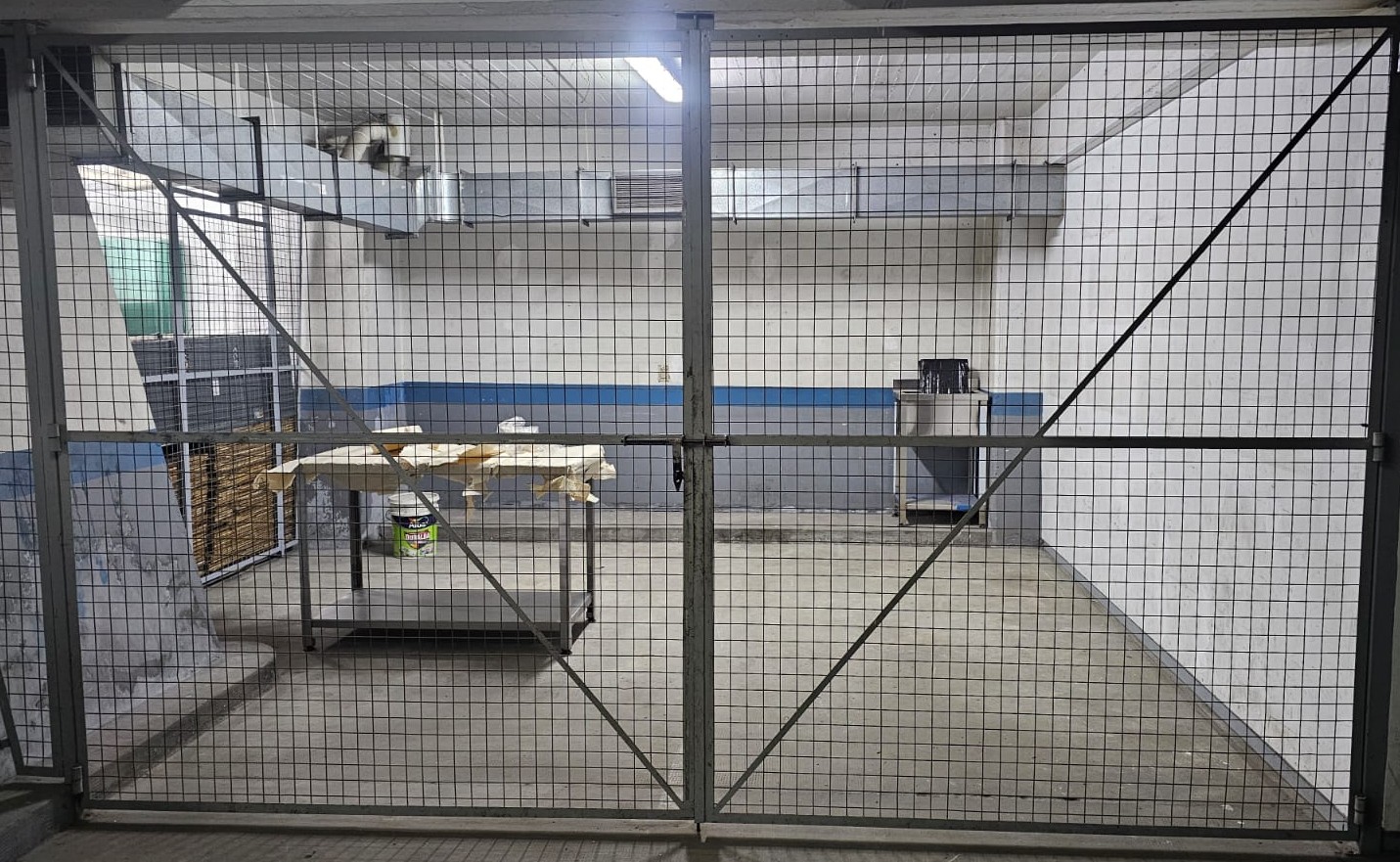
On December 5, a simple human mistake triggered a full reset: a forgotten hose flooded Floor 10 — a space currently operating as a data center.
"Por suerte no fue un fallo estructural ni eléctrico, pero el agua alcanzó todo el piso y obligó a detener operaciones de inmediato."
No critical infrastructure damage, but enough to force a decision: we’re moving everything.
"Equipo, ensayos, herramientas, y el plan completo se traslada al sótano para arrancar una nueva fase experimental."
New basement. New setup. New trials coming.
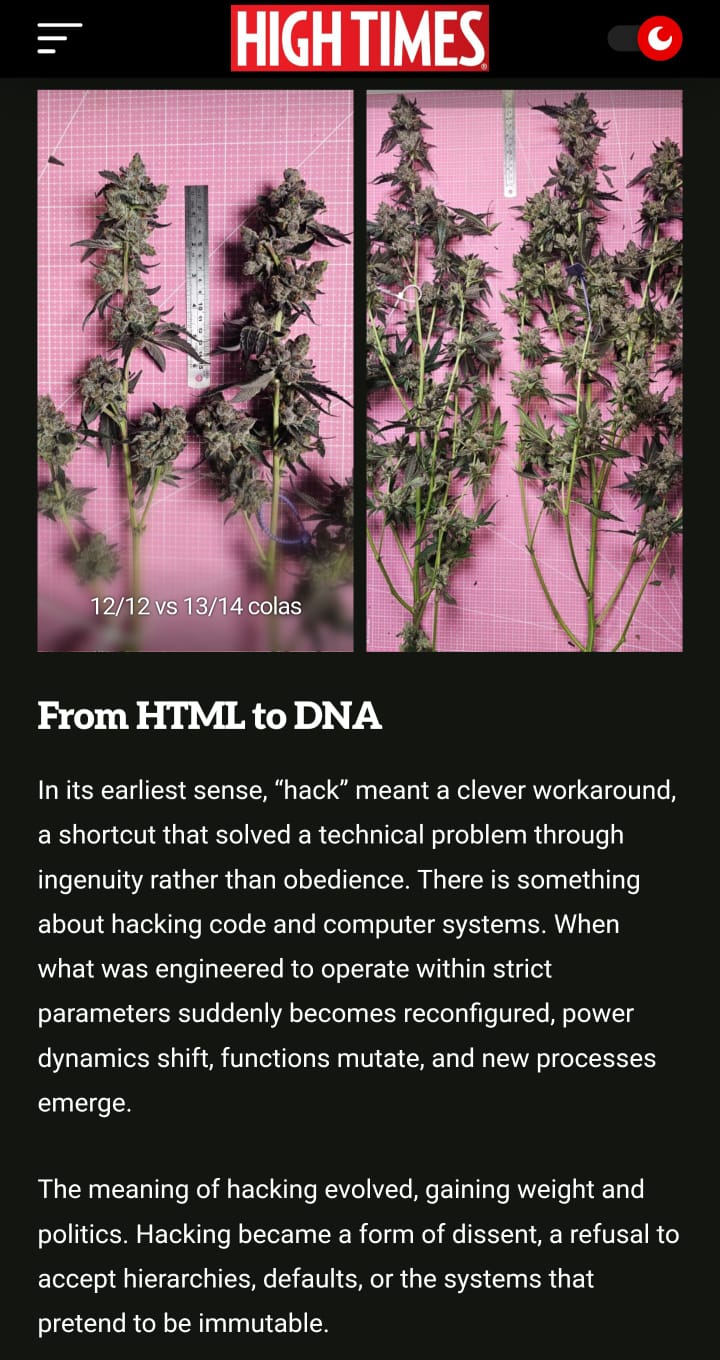
"12/12 vs 13/14 — same harvest day, more mature chemistry under the longer night (THC up + fresher volatile profile)."
With harvest day held constant, 13/14 lands in a more advanced chemical state. This supports the hypothesis that extending the night modulates the biological tempo.
Visual Evidence: Day 65 Comparison
"13/14 doesn’t just grow more — it reaches better chemistry faster."
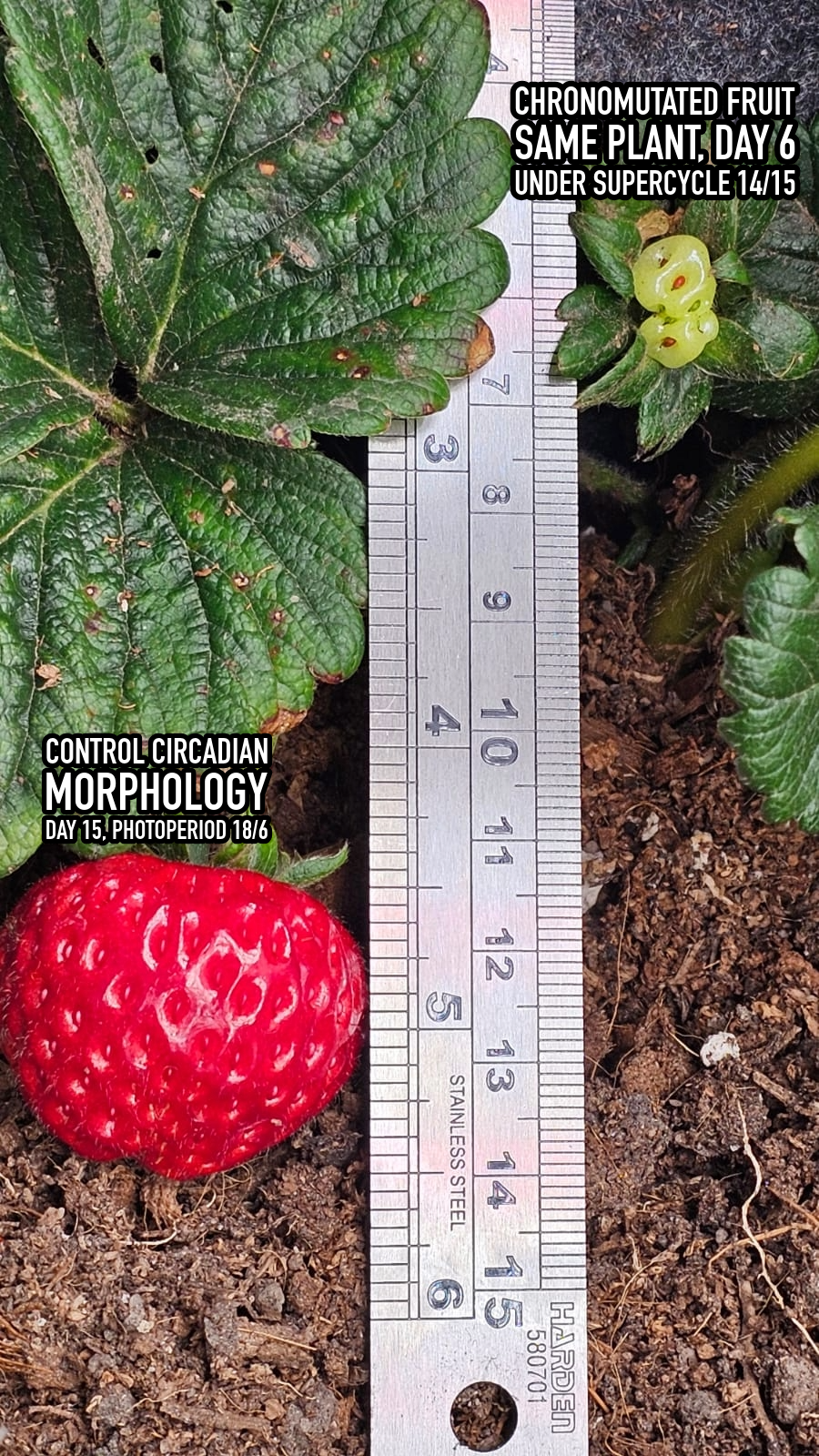
A single Fragaria x ananassa plant, initially under 18/6 vegetative photoperiod, was shifted to a 14/15 supercycle. After 6 days, the same individual displayed two fruits at once:
This natural intraplant split acts as an internal control, showing how photoperiod transitions can immediately reprogram reproductive development.
We initiate a controlled, clone-matched experiment to contrast the canonical 12/12 photoperiod with the asymmetric 13/14 supercycle. All variables are held constant except time. From today, development is logged in Virtual Nights (VN) — completed light/dark cycles — rather than human days. This is a live paper: methods and results update here as they happen.
| Parameter | Chamber A | Chamber B |
|---|---|---|
| Cycle length | 24 h | 27 h |
| Primary endpoint | Canonical | Chronomutated |
bioRxiv officially rejected our paper. Not for errors. Not for fraud. For being “inappropriate.”
A new field was born. It had roots. It had flowers. It had zombies. And still, the gatekeepers closed the door.
The morphogenesis won't be peer-reviewed. It will be WITNESSED.
They called it inappropriate. We call it science.
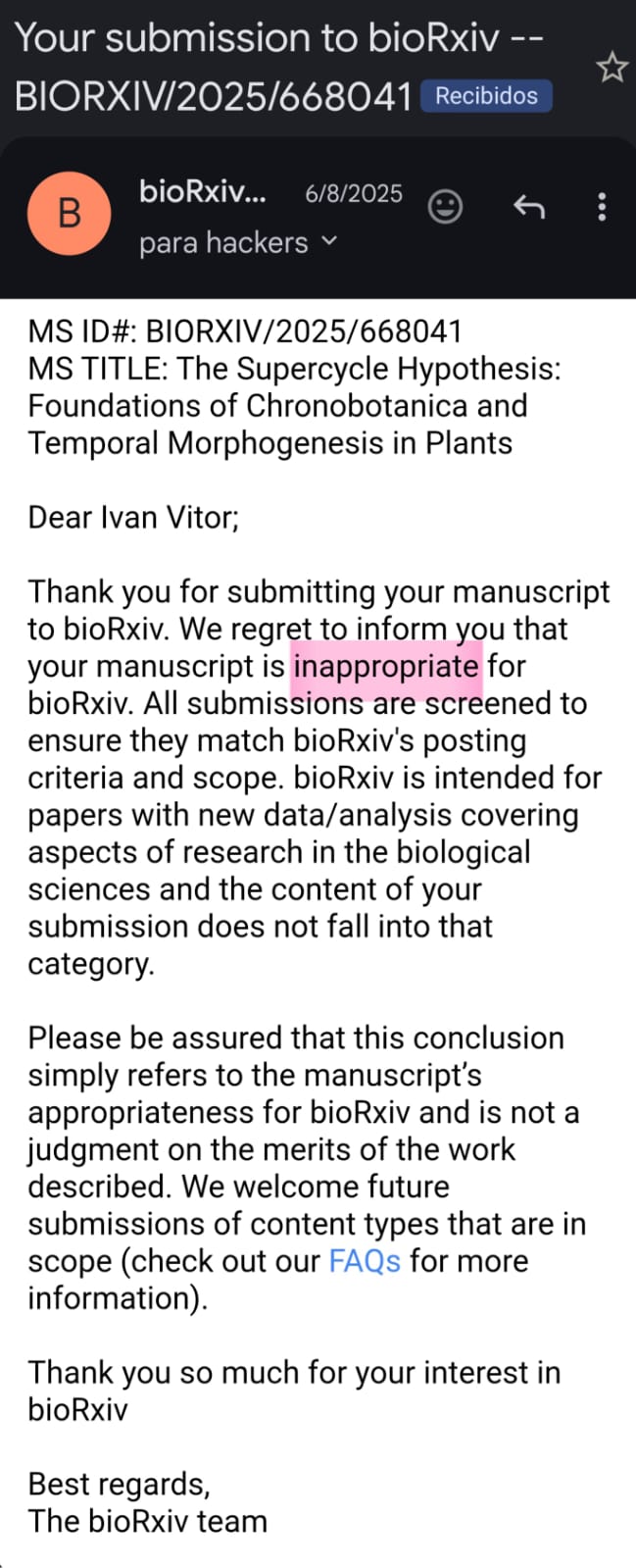
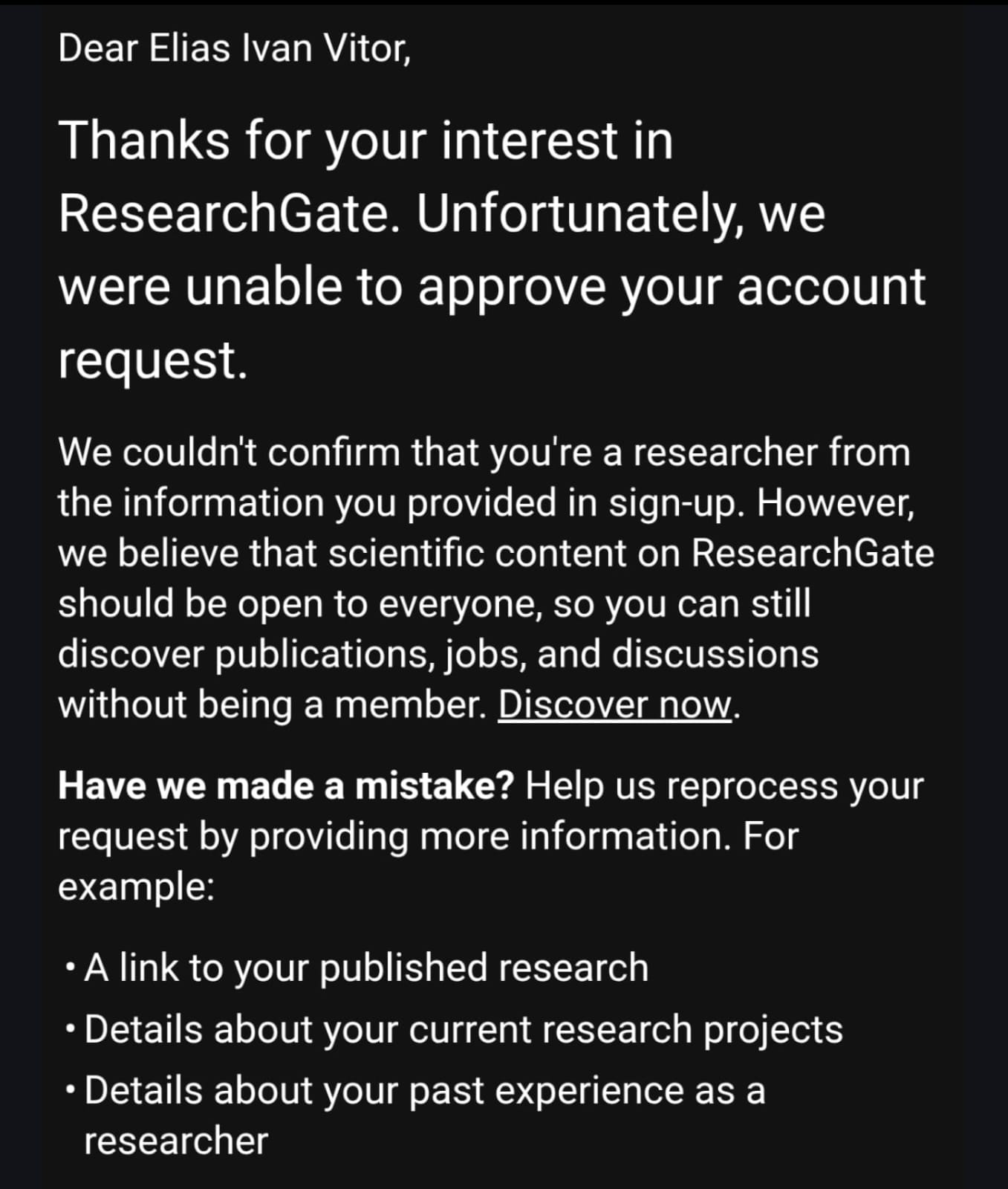
Still no answer from bioRxiv. ResearchGate already said no. Meanwhile: 776 in Telegram, 2500 active testers on supercannabis.ar web, we are Legion, Supercycle can't be stopped.
First experiment using cloned plants under controlled 12/12 and 13/14 conditions, aiming to compare resin, cannabinoid and terpene production. Designed for upcoming paper on Applied Chronobotanics.
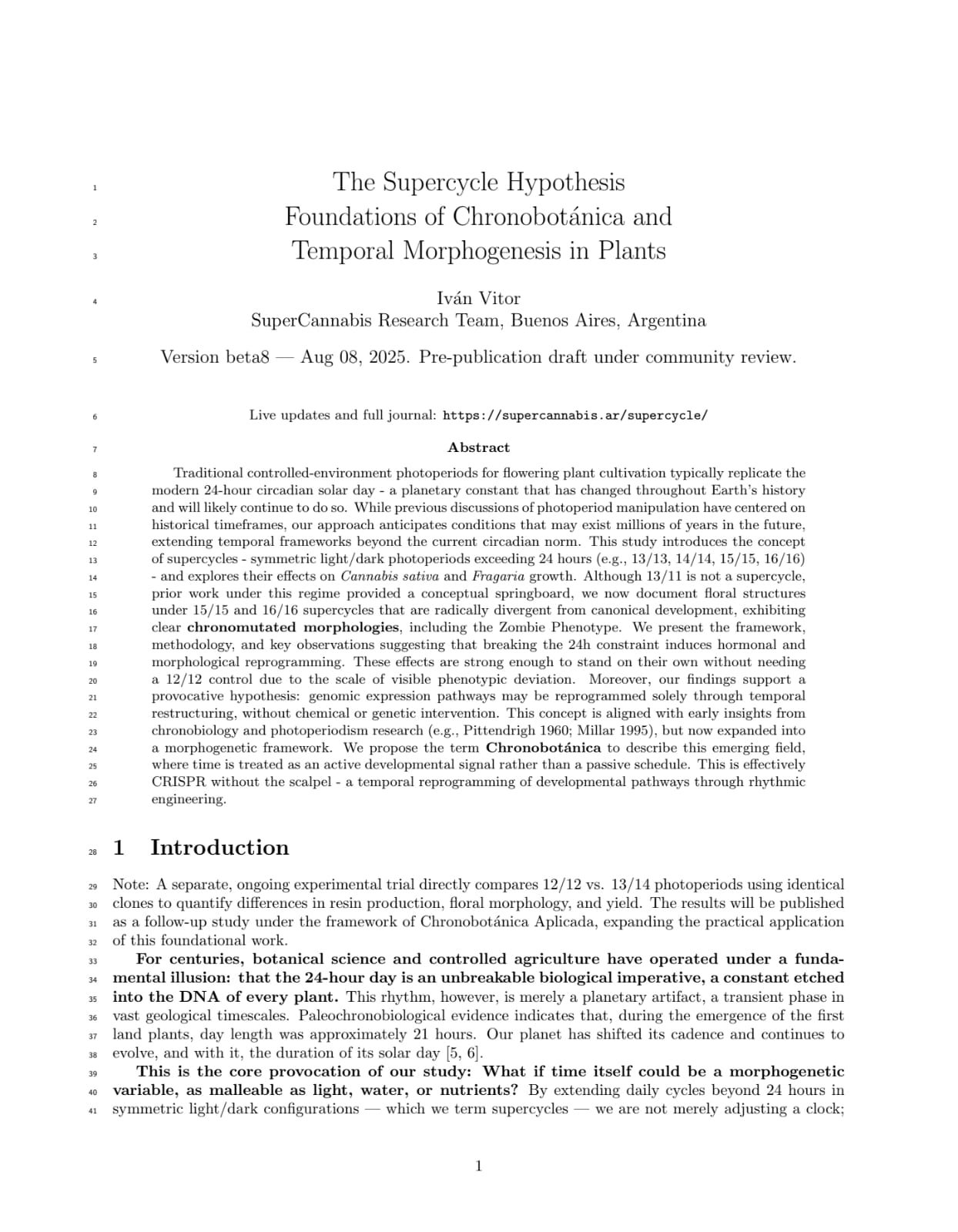
The paper "Foundations of Chronobotanica" was officially submitted to bioRxiv. As of now, it's still pending moderation. No response. No approval. No rejection. Just silence.
Meanwhile, resistance is growing.
🌍 Science should be free. Chronobotany has no gatekeepers.
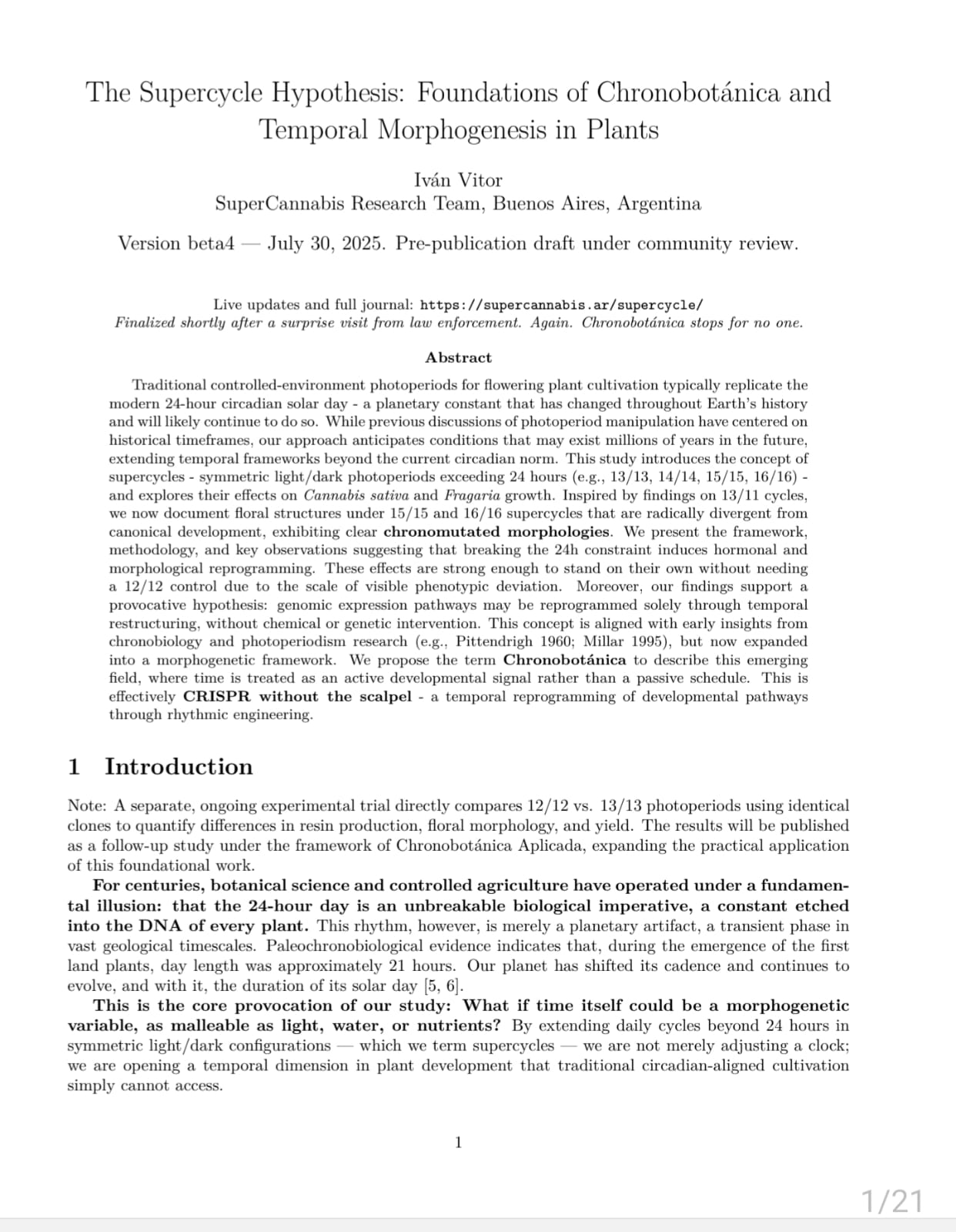
ResearchGate refused to let us in. We didn’t meet their institutional expectations. We weren’t wearing white coats. We didn’t ask for permission.
“God made men — but ChatGPT made them equal.”
We don't want a title.
We want a Nobel.
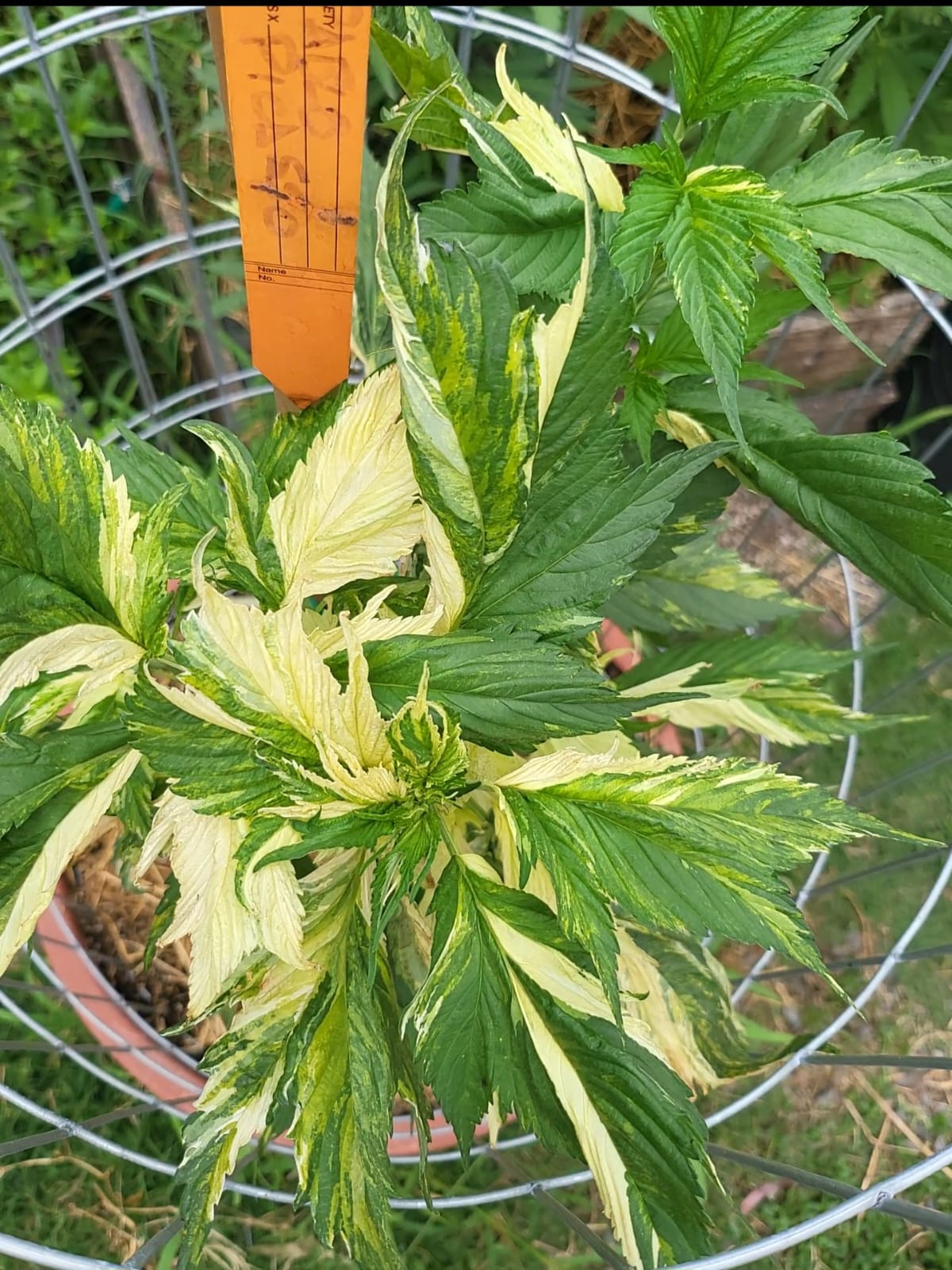
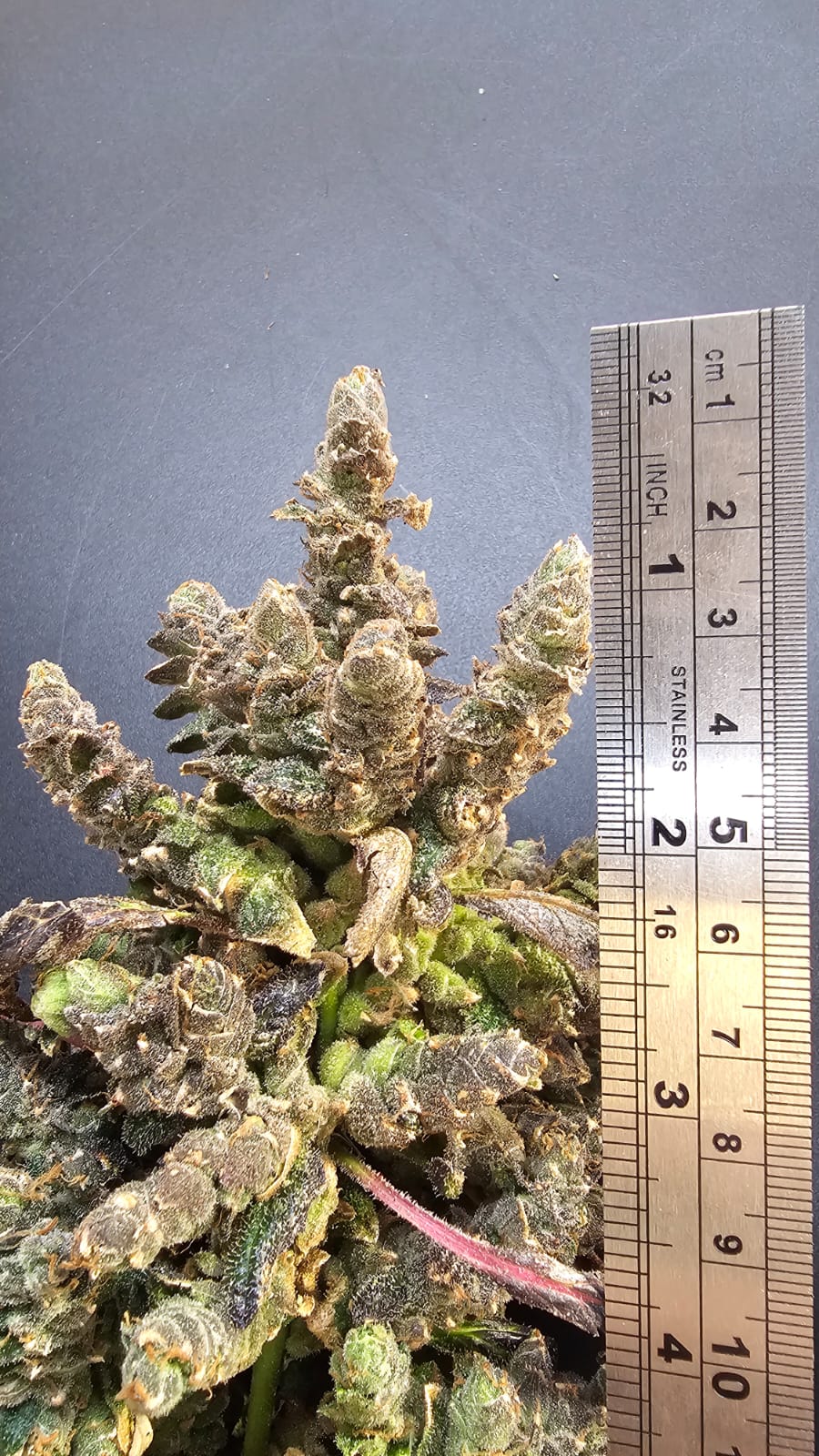
A LitFarm F2 plant under 15/15 kept producing stigmas for 201 human days (~161 supercycles). No senescence.
The Zombie State is real.
Somewhere between the 14th and the 16th virtual night, something shifted.
We didn’t just find a better way to grow cannabis. We discovered a new dimension of plant development — one that doesn't follow the rules of 24-hour biology. We called it Chronobotanica: the science of manipulating time as an active morphogen.
This isn’t just another grow hack. It's not polyploidy. It’s not male reversal. It’s not grafting. It’s bigger.
🔥 12/12 is dead.
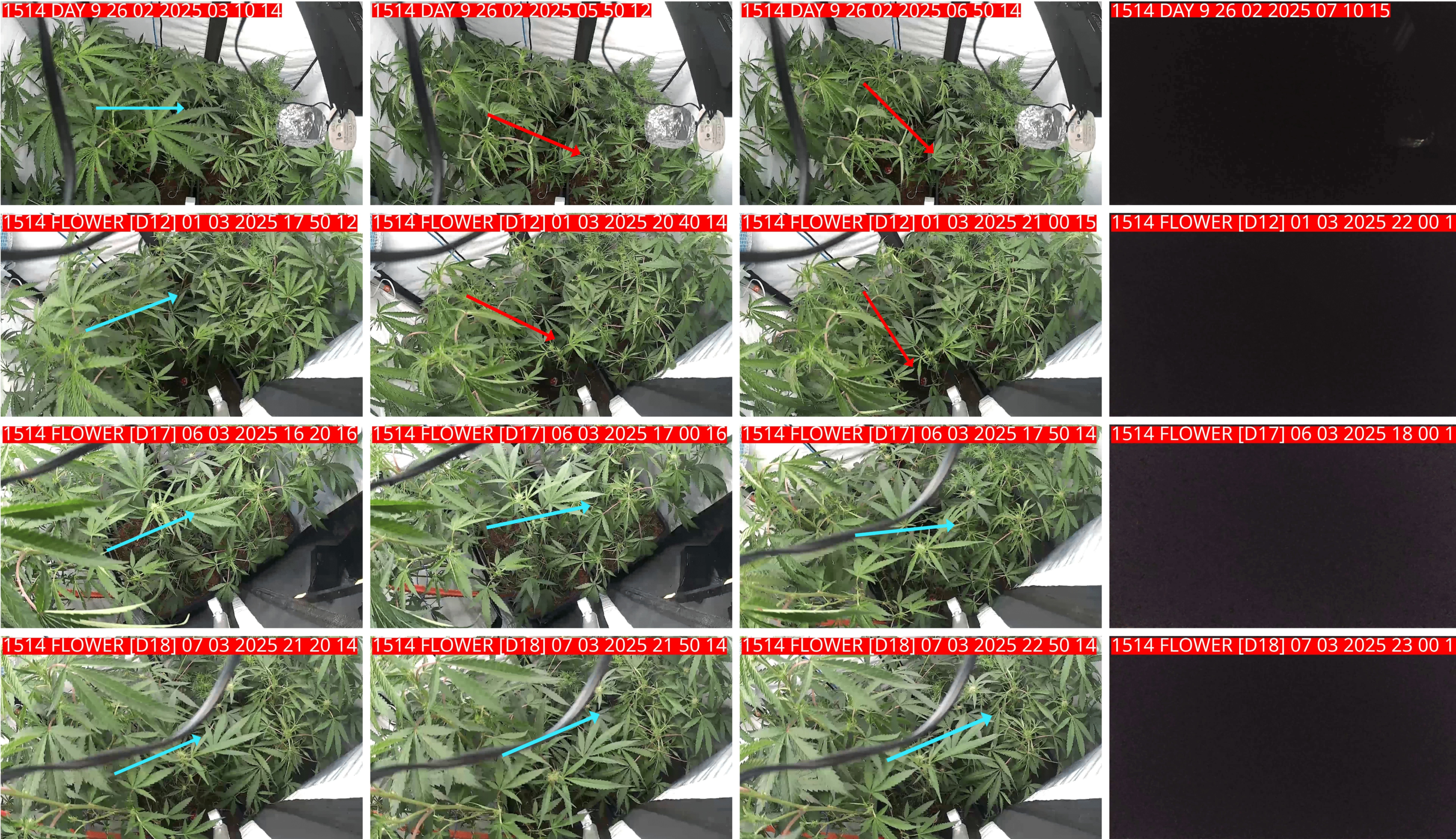
A Harambe plant under the 13/14 supercycle was recorded visually adapting to the new rhythm. Its leaves bent in sync with the artificial night, then re-synced. Circadian resistance collapsed in days.
A new era of collaborative hacking begins. The Supercycle Research Framework is released to the public at supercannabis.ar.
Thus was born the SUPERCYCLE THUNDERDOME a wild, open-source arena where growers, hackers, and underground scientists compete.
VIEW ACTIVE ENTRIESSide-by-side analysis of flowers under 12/12 and 14/14 confirms a significant increase in terpenes like myrcene, limonene and caryophyllene.
We conducted comparative trials across various supercycles — 13/13, 14/14, 13/14, 16/15, 15/15, and 16/16. The results showed consistent morphological changes.
The 13/13 cycle emerged as the best performer, consistently expressing the most refined phenotype of each cultivar — vastly superior to the traditional 12/12 schedule.
We conducted the first proof-of-concept of flowering outside the classical circadian framework, using a Wedding Cake specimen under a 17h light / 13h dark supercycle.
The exploit works.
This demonstrated that flowering is possible beyond 12/12 or 13/11, opening the door to real temporal engineering.
The outcome of replication? Moderate gains, but not revolutionary. That’s when we started asking the right question: Why stay inside the 24h day?
From that point, we shifted from replication to exploration. We found the exploit: decoupling cultivation from Earth's rotation.
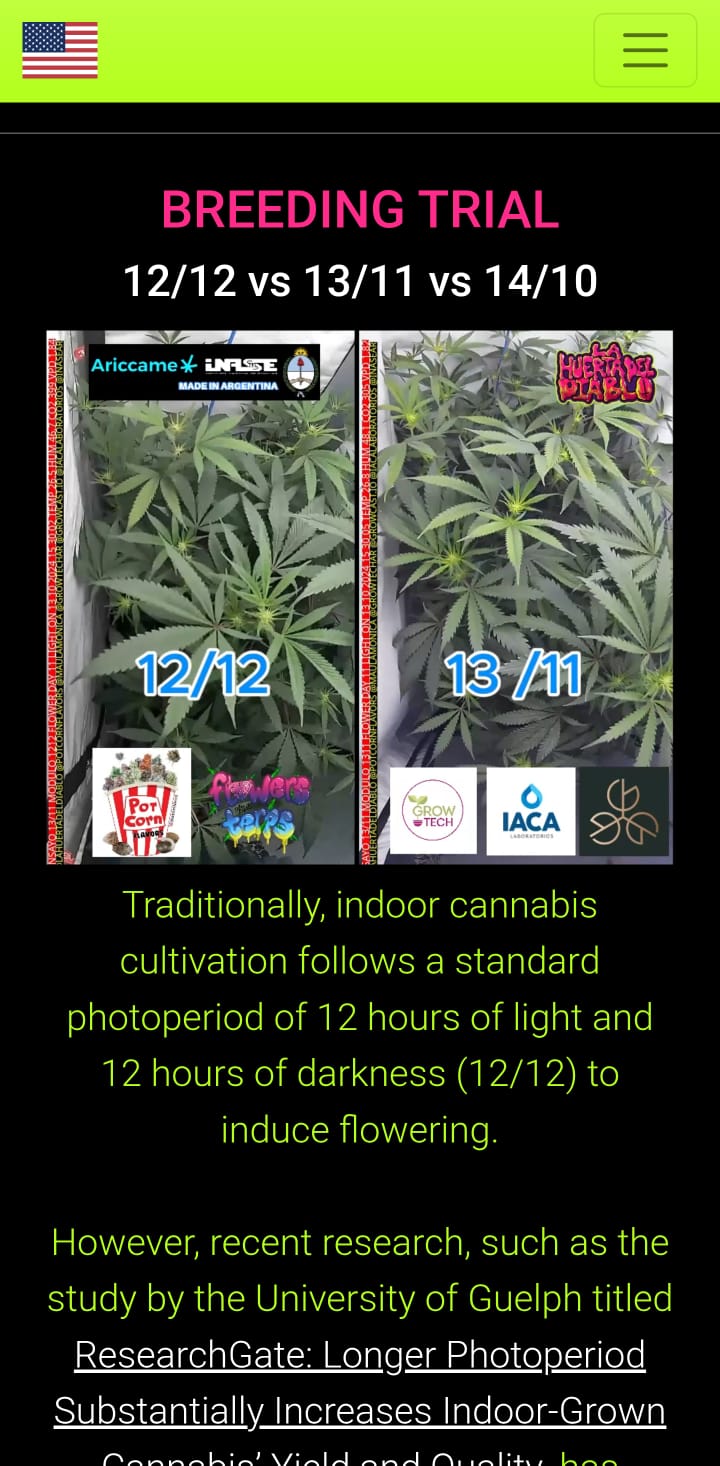
12/12 vs 13/11
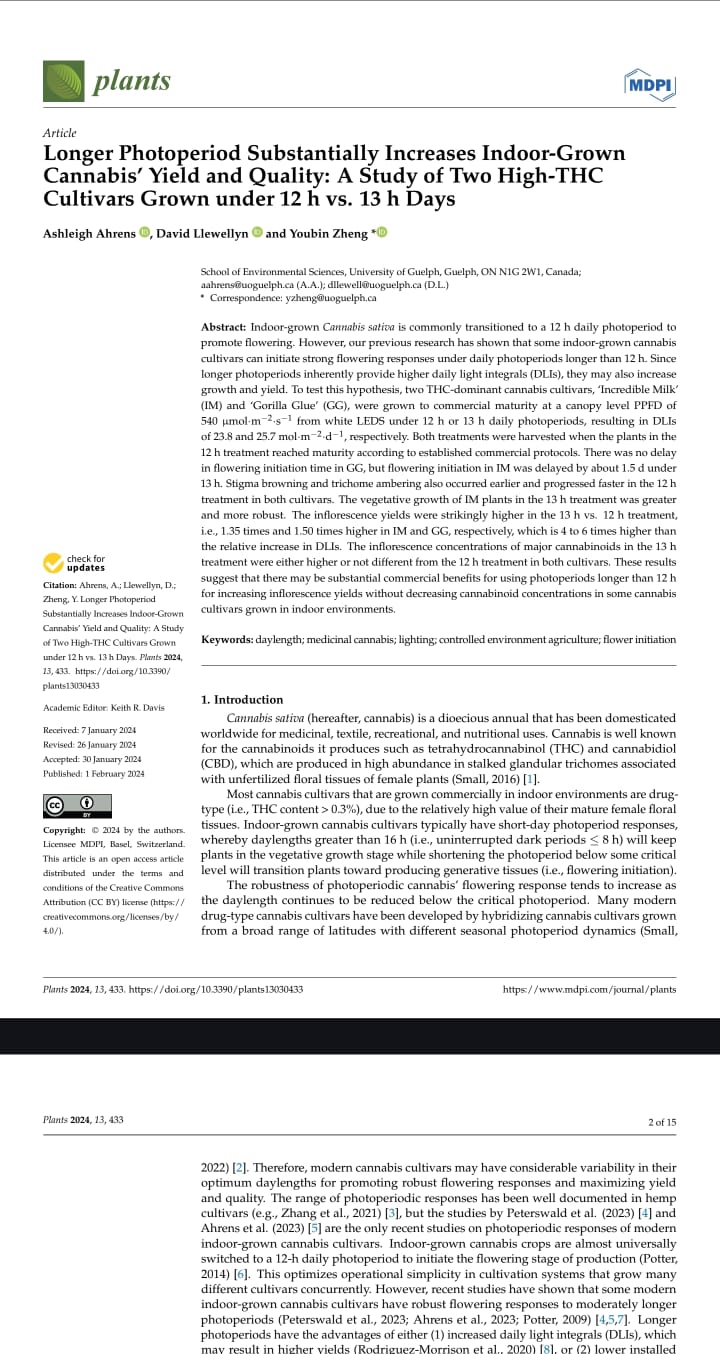
Inspirational paper
After the raid and the growing interest in polyploidy, biological hacking, and supercycles, we made a decision: we would no longer operate in silence.
This is no longer one man's lab.
It's an encrypted forest of experiments.

I held an active Phytobreeding Permit issued by INASE. Everything documented, legal, and intended for publication.
But when five small seed packs arrived from the U.S., the system acted. Customs flagged the envelope, and a prosecutor launched a criminal investigation. They didn’t question the science. They feared it.